Why Texas AC Systems Fail in August, and What That Week Actually Looks Like
A look at why so many Spring-area systems finally give out in the same two weeks every summer, and what usually gives out first.
August 25, 2026 · 3 min read
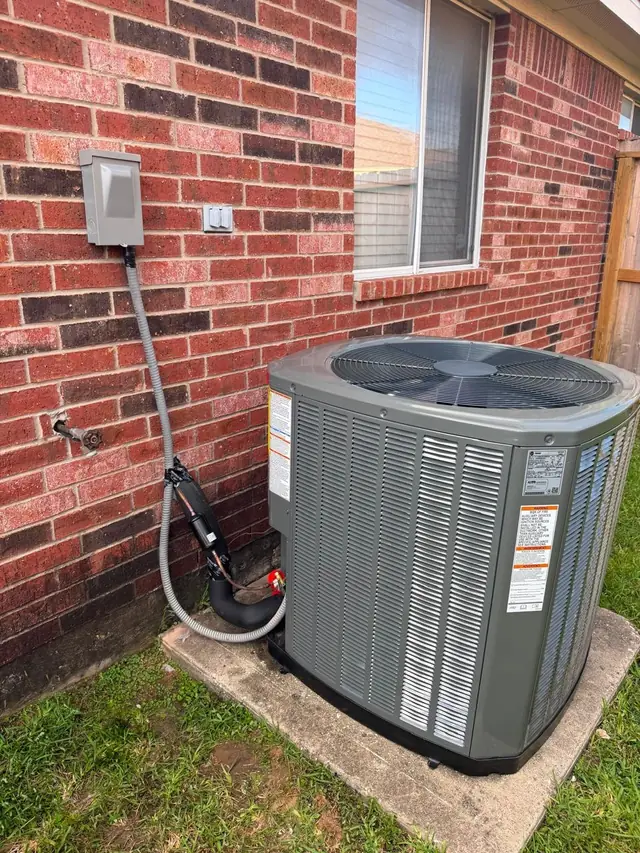
There's a pattern to it. Systems that limped through June and July, running longer than they should but still cooling the house, finally give out in the first or second week of August. It's rarely a mystery once you understand what the system has been doing for two straight months.
The load never lets up
In a lot of the country, a cooling system gets real breaks. Cool nights, mild stretches, days where it barely runs at all. Around Spring and the rest of north Houston, an August system can run close to the entire day and only shut off for short stretches overnight, if that. Every hour of runtime is an hour a compressor is under load, a capacitor is holding a charge, and a fan motor is spinning. None of that is free. Components that would show gradual wear over a decade somewhere milder can wear out noticeably faster here simply because the system logs so many more running hours per year.
The part that usually goes first
A run capacitor is a small cylindrical part that gives the compressor and fan motors the extra push they need to start and keep running smoothly. It's inexpensive and it's also one of the most common points of failure, because it degrades with heat and with every start cycle. On a system that's been cycling on and off all summer in triple digit attic and outdoor temperatures, a capacitor that was already weak in June is often the thing that finally fails in August. The symptom is usually sudden. The system was running yesterday and today it's just humming or not starting at all.
Airflow across the outdoor unit matters more than people think
The condenser sitting outside on its pad needs to move a lot of air across its coil to shed the heat it's pulled out of the house. Grass clippings, cottonwood fluff, dust, and anything else that settles on those fins over a season restricts that airflow. A restricted coil makes the whole system work harder to do the same job, which raises head pressure, raises the electrical load, and shortens the life of the compressor. A five minute rinse with a garden hose before the coil gets packed with debris is one of the cheaper ways to keep a system out of trouble going into the hottest stretch of the year.
Refrigerant is not something you top off like oil
Unlike a car, a properly sealed refrigerant system doesn't use up refrigerant over time. If a system is low, it's leaking somewhere, and adding more without finding and fixing the leak just delays the same failure. This matters more for older systems still running R-22, a refrigerant that's been phased out and is expensive and harder to source when it does need service. Current systems use newer refrigerants like R-454B instead, which is one of the quieter reasons a properly maintained modern system tends to be more predictable through a Texas summer than an aging one.
What the week before a failure often looks like
- The system runs longer than it used to for the same temperature drop
- Vents that used to blow strong air feel weaker, especially the ones farthest from the unit
- The thermostat shows the house holding a degree or two above the setting during the hottest part of the afternoon
- There's a faint hum or click from outside when the system tries and fails to start
None of these on their own means a full breakdown is coming, but together they're worth a call rather than waiting to see if it gets better on its own, especially heading into the part of the year when a same day appointment matters most. Waiting a few more days to see if it resolves itself is usually how a manageable repair turns into an afternoon with no working system at all in the hottest part of the year.
Getting ahead of it
KAC Express serves Spring, The Woodlands, Klein, Tomball and the surrounding towns, and answers calls seven days a week, 7 in the morning to 10 at night, with a same day guarantee for anyone who calls before 2pm. If your system has been running rough the last few weeks, it's worth a call now rather than after it quits entirely on the hottest afternoon of the month. (832) 326-5687.
KAC Express, (832) 326-5687
Call (832) 326-5687More articles
What Actually Happens When an Attic Air Handler Leaks
The one part of an attic cooling system that decides whether a clogged drain line becomes a service call or a ceiling repair.
Repair or Replace: Thinking Through an Aging R-22 System Without Getting Sold
A straightforward way to think through an aging R-22 system before you commit to another repair or a full replacement.